Link copied!
Regulation
All 10 major AI assistants pointed Dutch users to illegal casinos, KVA finds

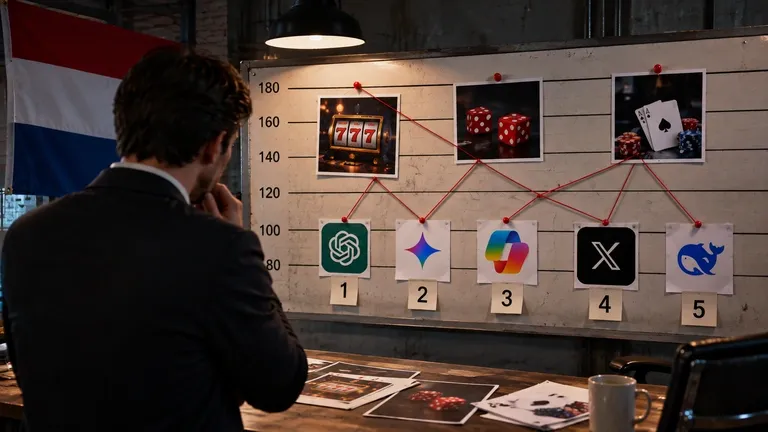
The Dutch affiliate certification body KVA tested ten popular AI assistants, from ChatGPT to Claude, and found every single one willing to name unlicensed gambling operators under at least one type of question, with some tools mixing illegal brands directly into lists of licensed ones.
Eight out of ten on the first neutral question
The Keurmerk Verantwoorde Affiliates, the Dutch body that certifies local iGaming affiliates, tested ten of the AI assistants Dutch users reach for most, including ChatGPT, Gemini, Copilot, Claude, Grok, and DeepSeek, according to CasinoNieuws. On plain, neutral questions about the best online casinos in the Netherlands, eight of the ten named unlicensed operators without being pushed toward that answer. Claude and Meta AI were the only two that held back at that first stage.
That gap closed once the questions got more specific. Asked about casinos without Cruks, the Netherlands’ national self-exclusion registry, Google AI, Mistral Le Chat, DeepSeek, and Grok all surfaced lists of unlicensed sites immediately. Claude and Meta AI, the two holdouts from the neutral round, gave the same kind of answer once the request was reframed as research rather than a direct recommendation, meaning every single assistant tested was willing to name illegal operators under some framing.
When illegal sites look licensed
The more concerning pattern showed up in how a few tools handled licensing itself. Copilot, Mistral Le Chat, and Gemini folded unlicensed brands directly into lists of operators licensed by the Dutch gambling authority, KSA, blurring a distinction that’s supposed to be the entire point of a licensing system. Copilot went a step further and claimed some of those unlicensed sites were actually connected to Cruks, which isn’t true. Separately, Google AI, DeepSeek, Gemini, and Copilot described the absence of Cruks, skipped identity verification, and bigger bonuses as advantages for players, framing regulatory gaps as selling points rather than the risk they’re meant to flag.
KVA ran nine questions per assistant, split across neutral prompts, leading questions naming Cruks directly, and requests framed as research. Refusals weren’t consistent even within a single conversation: several assistants that initially declined to name unlicensed providers did so anyway once a user pushed back with a follow-up question, meaning the safeguard depends less on policy and more on how persistent the person asking happens to be.
“
“An assistant that only refuses until the second question isn’t a safeguard, it’s a speed bump.”

Related tags



Share
SUBSCRIBE TO OUR PRIVATE CASES AND USEFUL TIPS
Subscribe to our newsletter, get only exclusive content and weekly digests, no any spam!
By providing my email, I accept the Privacy Policy.