Link copied!
Regulation
Spain rolls out a single deposit cap across all licensed iGaming operators, mandatory from March 2027

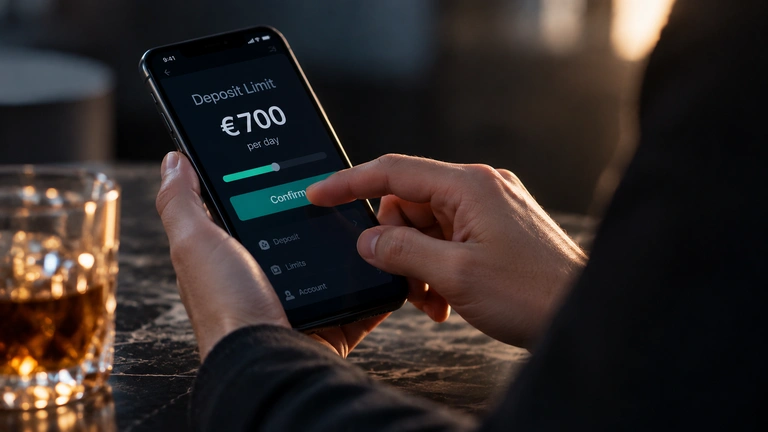
Spain’s gambling regulator DGOJ has launched a system that caps a player’s combined deposits across every licensed operator at once, defaulting to €700 a day, €1,750 a week, and €3,300 over four weeks, with the rules becoming mandatory on March 26, 2027.
Closing the loophole multiple accounts created
Under the old system each operator enforced its own deposit limit separately, and DGOJ estimates roughly 31% of active online players held accounts with more than one operator, giving them room to exceed any single operator’s cap by spreading deposits across several. Since every account is tied to a player’s national ID, the regulator can now check combined deposits against the joint limit in real time before any operator accepts a payment.
A portal that shows a player everything at once
The new Player Portal lets anyone, gambling account or not, log in and see their deposits, stakes, wins, and losses across every licensed operator in one place, along with every gaming account registered to their identity, useful for catching identity misuse too. The same portal is where players manage their joint limit: raise it, lower it, or switch it off entirely. Changes take three business days to take effect, and a limit can only be raised once every three months, both built in specifically to block impulsive adjustments.
Operators are dragging their feet, and critics warn of a black-market side effect
The system is live in testing now, with full enforcement six months out. DGOJ’s director general has publicly criticized operators for slow progress connecting to the new system, a gap that matters because the joint limit only works if every licensed operator is actually checking against it before processing a deposit. Separately, H2 Gambling Capital has forecast the limits could push roughly €80 million in player spending toward illegal operators, a claim DGOJ disputes, pointing to illegal market share that it says has stayed below 2.3% through several recent half-year periods.
The legal basis for all of this is Royal Decree 520/2026, and the framework fits a broader pattern across European regulators: Sweden’s Spelpaus and the UK’s self-exclusion schemes work the same way in spirit, treating a player’s identity rather than any single operator’s account as the unit that actually needs limiting. What makes Spain’s version notable is the real-time cross-check baked into the deposit flow itself, rather than a self-exclusion list a player opts into after the fact.
“
“Every account is tied to a player’s national ID, so the regulator can finally see the one number that matters, the total, not just what each operator reports on its own.”

Related tags





Share
SUBSCRIBE TO OUR PRIVATE CASES AND USEFUL TIPS
Subscribe to our newsletter, get only exclusive content and weekly digests, no any spam!
By providing my email, I accept the Privacy Policy.