Link copied!
Regulation
Dutch regulator and Google are building an EU whitelist that could lock affiliates out too


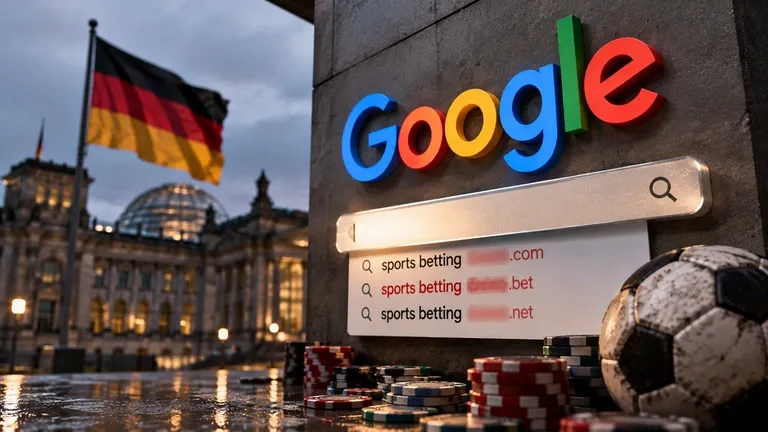
The Dutch gambling regulator is working with Google to build an EU-wide whitelist of licensed operators, a mechanism its own chairman says goes against Google’s business model and that he’s prepared to fight for in court for up to five years if voluntary cooperation falls short.
A whitelist born out of a Dublin meeting
The Dutch gambling regulator KSA is working directly with Google to build an EU-wide whitelist of licensed gambling operators, a list Google would use to identify which brands are allowed to advertise and which aren’t. According to Next.io, the plan traces back to a meeting earlier this year in Dublin, where regulators from several European countries sat down with Google and Meta at the companies’ European headquarters. That meeting produced a joint task force aimed specifically at reducing the visibility of black-market operators online, and the Google whitelist is the first concrete mechanism to come out of it. A parallel system for Meta hasn’t been confirmed. Whether the list would touch Google’s search results as well as its ad products, or stay confined to advertising alone, hasn’t been specified either.
“Preferably amicably, if necessary by force”
KSA chairman Michel Groothuizen isn’t pretending this is a comfortable arrangement for either side. “Voluntarily giving this up or imposing substantial restrictions on themselves goes squarely against their business model,” he said, describing exactly why a platform built on ad revenue would resist narrowing who’s allowed to buy ads. His next line made clear that voluntary cooperation isn’t the only option on the table: “Yet that is what we demand of them, preferably amicably, if necessary by force.” If Google and Meta don’t deliver through the task force, Groothuizen has said the KSA is prepared to go to court, citing both Dutch law and the EU’s Digital Services Act as potential grounds, though he’s acknowledged that DSA enforcement would likely fall to the European Commission rather than the KSA directly, and that litigation of this kind could drag on for up to five years. The Dutch trade association VNLOK is already running a separate lawsuit against Meta that’s reportedly entering its final phase, which gives Groothuizen’s threat something concrete sitting behind it rather than just rhetoric.
The scale of the problem the whitelist is meant to fix
None of this is coming out of nowhere. The KSA’s own 2025 reporting estimated roughly 50,000 illegal gambling ads were appearing on social media every month, and in April alone the regulator filed more than 4,600 individual reports against Meta over gambling promotions on Facebook and Instagram. A review of 277 ads pulled from Meta’s own Ad Library found that 31 of them, better than one in ten, were targeting age brackets that included 18-to-23-year-olds despite rules meant to keep gambling advertising away from the youngest legal audience. Licensed Dutch operators mostly stayed within the rules in that same review, a 92.7% compliance rate, which makes the illegal share of what’s actually circulating look even more lopsided by comparison.
Why affiliates should read this as more than an operator story
Affiliates sit directly inside the blast radius here, and not hypothetically. The KSA has already stated, separate from this whitelist plan, that affiliates operating in the Netherlands may only promote licensed operators, and that promoting an unlicensed one can bring a financial penalty regardless of whether the affiliate itself holds a license. A German court has gone further in a parallel case, ruling that an affiliate linking to an unregulated operator is, for enforcement purposes, treated as advertising an unregulated site itself, not as a neutral middleman passing along a link. A Google whitelist that flags which operators are approved doesn’t just threaten operators who fail to make the list, it hands regulators a much cleaner, automated way to trace which affiliates are still sending traffic to names that never appear on it.
What still isn’t decided
What’s missing from everything disclosed so far is the part that would actually let anyone plan around this: no start date, no published criteria for what gets an operator onto the list, no confirmation of which specific Google ad products or placements the mechanism would cover, and no word on how a single EU-wide list would reconcile the fact that gambling licensing in Europe still runs country by country rather than under one unified regime. A Maltese license doesn’t mean the same thing as a Dutch one, and a whitelist built for “the EU” has to decide somehow whose approval actually counts. Until Google and the KSA answer that, the practical effect of this whole initiative remains a direction rather than a deadline, serious enough that Groothuizen is willing to threaten a five-year court fight over it, but still short of anything an operator or affiliate can act on today beyond assuming the net is tightening.
“
“A regulator telling Google ‘preferably amicably, if necessary by force’ isn’t diplomatic language, it’s a chairman telling you exactly how this ends if the voluntary version fails.”

Related tags




Share
SUBSCRIBE TO OUR PRIVATE CASES AND USEFUL TIPS
Subscribe to our newsletter, get only exclusive content and weekly digests, no any spam!
By providing my email, I accept the Privacy Policy.