Link copied!
AI
OpenAI names the PHP flaw it helped find, then ships a free checker to find exposed sites

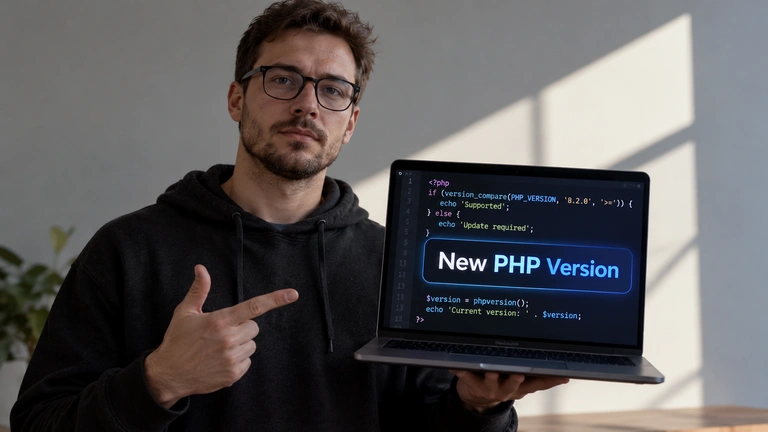
The critical PHP vulnerability patched on October 21 now has a name, PHP2Shell, because OpenAI says its own AI model helped a security researcher find it first, and the company has followed up with a free tool to check whether a given site is still exposed.
Two labs found the same bug within weeks of each other
The vulnerability now has a name because of who found it first. Under OpenAI’s Patch the Planet initiative, a researcher at security firm Calif used GPT-5.6 Sol to find the first bug on August 1 and reported it to the PHP project on August 11. Wiz, now part of Google Cloud, independently landed on the same flaws around August 19 using Gemini 4 Argon and its own Wiz Atlas tooling. OpenAI president Greg Brockman described roughly two months of coordinated remediation that followed, involving PHP’s maintainers, security vendors, and government bodies, before the October 21 public disclosure.
A free checker, not an exploit tool
OpenAI followed the disclosure with a free checker, published as a GitHub repository under its own account rather than a third party’s. The tool, phpcheck.js, is also packaged as two Codex skills, phpcheck-url for checking a site by URL and phpcheck-server for when you already have access to the machine running it. Point it at a site and it reads the X-Powered-By and Server HTTP headers, falling back from a HEAD request to GET only if the server returns 405 or 501; point it at a local install and it just runs php -v. Either way, it compares the detected version against a hardcoded cutoff for each PHP branch and returns OK, VULNERABLE, or UNKNOWN, nothing more invasive than that.
What the tool can’t tell you
The README is upfront about where that falls short. A result of UNKNOWN, missing headers, an unrecognized version, a prerelease build, doesn’t mean a site is patched, and the tool explicitly says so. Version comparison alone can also miss the real picture: distributions that backport the fix without bumping the version string, or servers that hide their headers entirely, will read as unverifiable rather than safe. OpenAI frames the check as a starting point for figuring out exposure, not a substitute for confirming the fix against PHP’s own security release notes.
“
“OpenAI frames the check as a starting point for figuring out exposure, not a substitute for confirming the fix against PHP’s own security release notes.”

Related tags



Share
SUBSCRIBE TO OUR PRIVATE CASES AND USEFUL TIPS
Subscribe to our newsletter, get only exclusive content and weekly digests, no any spam!
By providing my email, I accept the Privacy Policy.