Link copied!
Betting
WSJ investigation finds FIFA’s official World Cup prediction market is mostly circular trading

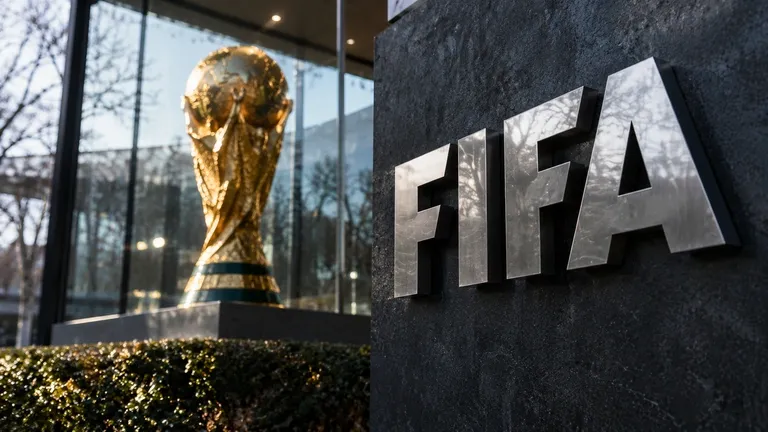
A Wall Street Journal investigation found that most of the trading volume on ADI Predictstreet, FIFA’s official World Cup 2026 prediction-market partner in a deal worth over $150 million in exclusive advertising rights, came from wallets trading almost exclusively with each other.
$108 million of $167 million traced back to the same cluster
Of the $167 million traded on ADI Predictstreet through late September, roughly $108 million came from accounts that traded almost exclusively with one another, according to the Wall Street Journal. Three Harvard students uncovered the pattern by combing through public blockchain records, and outside experts who reviewed their findings described the activity as inorganic rather than organic market demand. Since late August, a network of just 795 wallets has accounted for 99% of all trading volume on the platform, and in one local market tracking a Texas election, every single transaction reportedly came from that same cluster of accounts.
One wallet funded the network, and it also collects the fees
Those 795 wallets were funded from a single cryptocurrency address, the Journal found, one that also collects the platform’s trading fees, fees that typically flow to the operator of the exchange itself. ADI Predictstreet is FIFA’s official prediction-market partner for the 2026 World Cup, a deal reportedly worth more than $150 million in exclusive advertising rights, which makes the gap between reported volume and apparently real trading activity more than a technical footnote. The platform is licensed in Gibraltar, and the territory’s gambling regulator said a preliminary review found no harm to consumers and no breach of its rules against self-trading. ADI Predictstreet didn’t respond to the Journal’s request for comment, and FIFA declined to comment as well.
The timing raises a harder question than compliance
The timing adds another layer to this. ADI Predictstreet brought Kalshi on board to expand trading right as the World Cup’s knockout stage began, a move built on the premise that interest, and real trading volume, would only grow once the tournament hit its highest-stakes matches. A platform where 99% of volume traces back to 795 wallets funded from one address isn’t the kind of liquidity that partnership was presumably meant to put on display, and the regulator clearing self-trading rules doesn’t settle the separate question of whether the headline volume numbers FIFA and its partners have been citing publicly ever reflected real demand in the first place. For a market built specifically to put a price on World Cup outcomes, that distinction matters more than a routine compliance check can resolve.
“
“A preliminary compliance check doesn’t answer whether the volume FIFA has been citing ever reflected real demand.”

Related tags




Share
SUBSCRIBE TO OUR PRIVATE CASES AND USEFUL TIPS
Subscribe to our newsletter, get only exclusive content and weekly digests, no any spam!
By providing my email, I accept the Privacy Policy.