Link copied!
AI
Is Nvidia secretly throttling your GPU’s AI power? A free Linux tool claims to unlock it

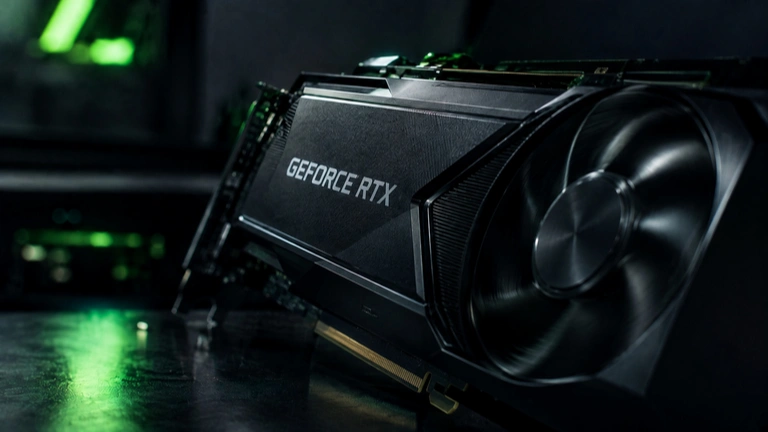
Two open-source Linux tools claim Nvidia has been quietly capping how fast its consumer GPUs can run the matrix math behind AI, and both back that claim up with benchmark numbers anyone can reproduce.
The repos are real, and so are the raw numbers
Two open-source Linux kernel modules are claiming to strip a speed limit out of Nvidia’s consumer GPUs, and the numbers behind the claim are real enough to check. Zagitta/gpu-unlock targets RTX 30-series cards (GA102, GA103, GA104, GA106 chips, with results reported on the 3090 Ti, 3090, 3080, 3070, and 3060 12GB) and has picked up 8,200 stars and 859 forks on GitHub. JustAResearcher/gpu-unlock-ada does the same for Ada-generation cards, mainly the RTX 4090, with experimental support for the 4090 D, 4080, 4070 Ti SUPER, 4070, and 4060 Ti, and sits at 3,400 stars and 459 forks.
How it works, and the theory behind why Nvidia would do this
Both tools work the same way: a kernel module loads before Nvidia’s own driver binds to the card, writes new values to the GPU’s speed-selector registers, and forces a function-level reset, all without touching the stock driver or firmware files Nvidia ships. On a 3090 Ti, the author measured BF16 dense GEMM throughput going from 87.5 to 157.4 TFLOPS, a jump that lines up with the long-running theory that Nvidia deliberately caps matrix-math instruction issue rates on gaming silicon to protect the pricing gap with its data-center cards, a claim Nvidia has never confirmed or denied. On the RTX 4090, instruction-level FP16 throughput went from 165.6 to 331.6 TF/s in the author’s own testing.
The real-world gain is smaller than the headline number
Real-world gains land well short of that near-2x headline number once you’re running an actual workload instead of a synthetic benchmark. GEMM tests on the 4090 showed 12% to 34% gains for FP16 and 16% to 20% for BF16 depending on matrix shape, with some shapes unchanged entirely. LLM inference barely moves either: prefill improved 14% to 36% in testing, while decode and INT8 performance stayed flat, because token generation lives and dies on memory bandwidth rather than raw matrix throughput, and neither tool touches memory speed. If you’re fine-tuning LoRAs or training from scratch, the gains are real and worth having. If you’re just running a chatbot locally, this unlock won’t do much for you.
Not a plug-and-play install
Both projects are upfront that this isn’t a plug-and-play install. The Ada tool requires a full cold boot for the first unlock attempt, warns against running nvidia-smi or CUDA tools beforehand since they can bind the driver first, and says a kernel upgrade means regenerating and re-validating the initramfs image. Suspend resets the speed-selector values on both cards, so the module has to re-unlock on resume, and hibernation isn’t supported at all. Neither README reports bricked hardware, but both are explicit that most of their performance data comes from a small number of individually tested cards, not a broad validation pass.
“
“If you’re fine-tuning LoRAs or training from scratch, the gains are real and worth having. If you’re just running a chatbot locally, this unlock won’t do much for you.”

Related tags





Share
SUBSCRIBE TO OUR PRIVATE CASES AND USEFUL TIPS
Subscribe to our newsletter, get only exclusive content and weekly digests, no any spam!
By providing my email, I accept the Privacy Policy.