Link copied!
Casino
Wharton study will test whether GLP-1 drugs curb gambling and impulsive spending

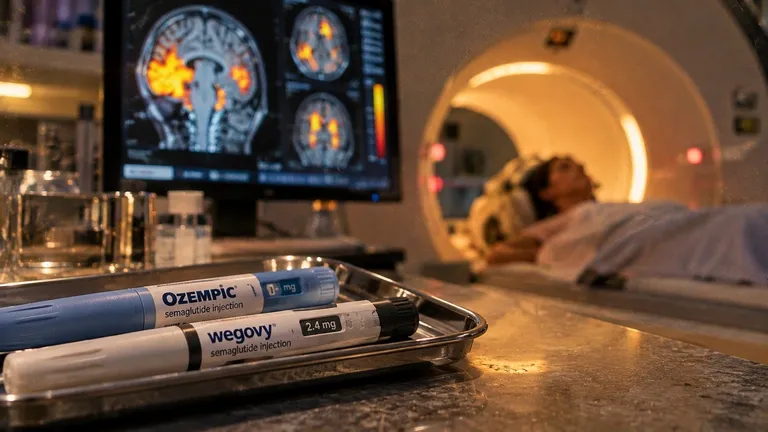
The Wharton School is launching a study, running from mid-October through March 2027, to test whether GLP-1 drugs like Ozempic and Wegovy dampen the brain’s reward response enough to reduce gambling, impulsive shopping, and other risky financial decisions.
MRI scans and a classic impulse-control test
The Wharton School is running a study, starting in mid-October and continuing through March 2027, to test whether GLP-1 drugs like Ozempic and Wegovy change how people gamble, shop, and make other risky financial decisions. According to CBS News, neuroscientist Michael Platt and his team will scan roughly 180 participants with MRI while they complete financial tasks, including a classic test of impulse control: choosing between $20 right now or $50 two months later. Participants also passively view 14 images depicting spending opportunities, and at least one of the choices they make during the study carries real financial consequences rather than being hypothetical.
The underlying theory is that GLP-1 drugs dampen the brain’s reward system, the same mechanism researchers already credit for reduced food cravings, and that dampened reward response could extend to the rush people get from a bet, an impulse purchase, or a luxury splurge. Platt frames it as a structural question rather than a short-term mood effect: “We believe GLP-1s will ultimately lead to some structural remodeling of the brain, which is where some of those long-term impacts on food choice could show up, but also on financial decision-making.” That’s a hypothesis the study is built to test, not a result it’s already produced.
Funded by a company whose CEO shaped the hypothesis
The study isn’t happening in a vacuum. Boston University researchers reported earlier this year that GLP-1 drugs appear to turn down the brain’s reward signals broadly enough to affect cravings for gambling, alcohol, and shopping alongside food, work that gave the Wharton project its starting hypothesis. It’s also not an independently initiated academic project: Noom, the digital health company funding the research, is run by CEO Geoff Cook, whose own earlier work is part of what shaped the study’s premise. That doesn’t make the findings wrong, but knowing who’s paying for a study matters before treating its eventual conclusions as neutral science, the same scrutiny that gets applied to responsible-gambling claims funded by the gambling industry itself. If the results hold up, a drug class already reshaping obesity treatment could end up getting discussed in the same breath as responsible-gambling tools, a connection that’s speculative today and won’t be testable until the data comes in after March 2027.
“
“A drug that quiets cravings for food, gambling, and impulse buys all at once sounds too convenient to be true, which is exactly why the MRI data matters more than the theory.”

Related tags






Share
SUBSCRIBE TO OUR PRIVATE CASES AND USEFUL TIPS
Subscribe to our newsletter, get only exclusive content and weekly digests, no any spam!
By providing my email, I accept the Privacy Policy.