Link copied!
AI
Moonshot AI open-sources Kimi K3 — the largest openly released model to date

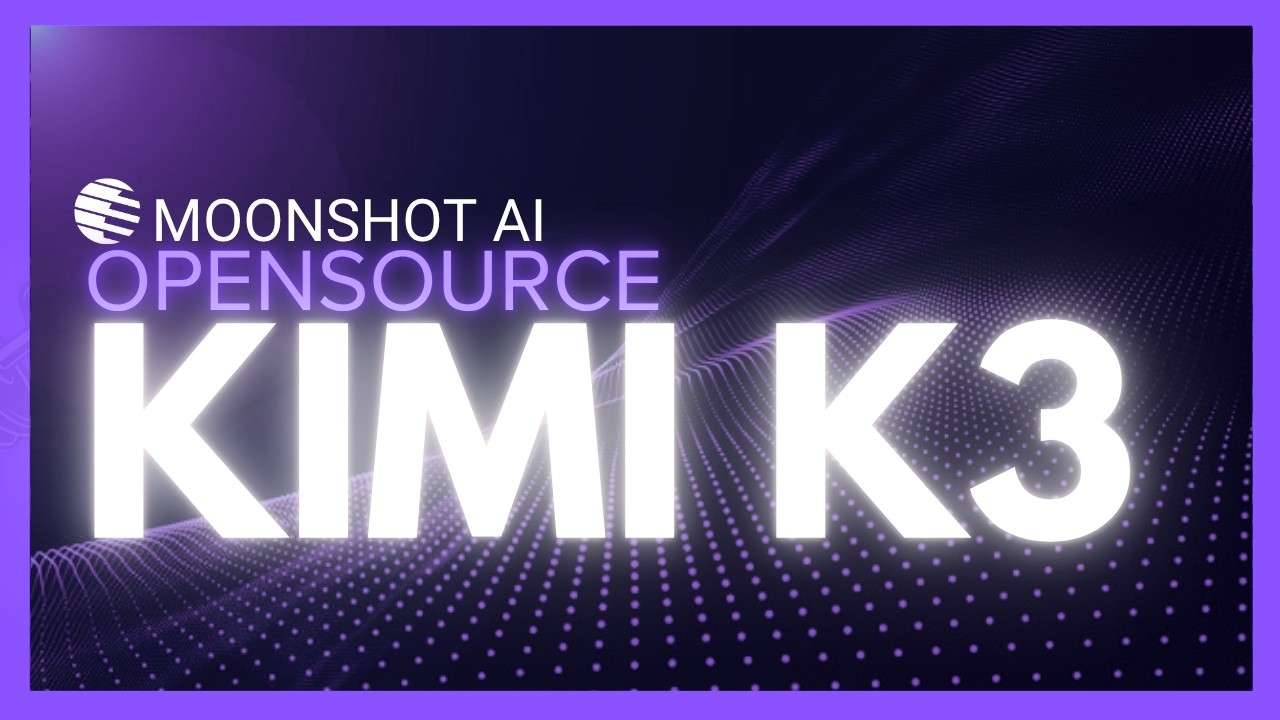
Chinese lab Moonshot AI has followed through on a promise to open its flagship model, Kimi K3, and it is doing so without holding back — the version going open is the top-tier model itself, not a stripped-down variant.
For readers who don’t track the Chinese AI market: Moonshot AI is a Beijing-based company backed by Alibaba, one of the leading contenders to become a domestic rival to OpenAI and Anthropic inside China. Before Kimi K3, the brand was known mostly among developers focused on the Chinese market, but this release is clearly aimed at international attention.
What’s known
Kimi K3 was officially unveiled on July 16, first through Moonshot’s API and cloud hosting, with full model weights becoming available for direct download on July 27 under a modified MIT license. The model runs 2.8 trillion parameters — the first publicly available neural network to cross the 3-trillion mark, and effectively the largest open model released to date.
Under the hood is a mixture-of-experts architecture paired with a proprietary technology Moonshot calls Kimi Delta Attention: instead of activating every parameter for every query, the system engages only the relevant subset, keeping inference costs manageable even at this scale. On top of that sits a 1-million-token context window, native image understanding, and an always-on reasoning mode the company calls “thinking mode.”
On benchmarks, K3 performs on par with the most capable proprietary systems from Anthropic and OpenAI, and the model was specifically built for long agentic task chains, coding work, and reasoning. The release is timed to the World Artificial Intelligence Conference in Shanghai, positioned to make as much noise as possible around the industry’s biggest event of the year.
What all of this looks like in practice — from setup to the first test prompts — is covered in a fresh breakdown of the release in the video below:
What it means for developers
Opening the top model rather than a scaled-down one is rare — companies typically either publish mini versions for attention or keep their flagships closed for commercial advantage. Here both factors line up at once: an open license and a claimed parity with the best closed systems, a combination that historically hasn’t come together often.
The practical effect is a choice between cheap third-party API access and fully local deployment on your own hardware, without per-token billing or dependence on someone else’s infrastructure. For teams running into token costs on comparable proprietary models, that changes the math directly — though self-hosting a model this size demands serious compute, this isn’t something you spin up on a laptop.
“
The largest open model released to date, matching benchmark parity with closed flagships from Anthropic and OpenAI, is a combination of facts that hasn’t lined up before — and that’s exactly why this release deserves more attention than a routine open-source announcement.

Related tags




Share
SUBSCRIBE TO OUR PRIVATE CASES AND USEFUL TIPS
Subscribe to our newsletter, get only exclusive content and weekly digests, no any spam!
By providing my email, I accept the Privacy Policy.