Link copied!
AI
FLUX 3 Image Klein brings 4K generation and editing to an 8 GB GPU

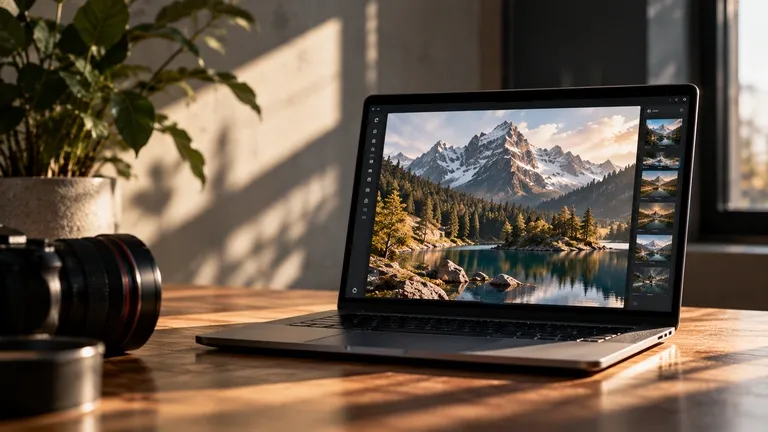
Black Forest Labs released FLUX 3 Image Klein, a 5.6-billion-parameter open-weights image model that keeps its flagship’s native 4K output and pixel-perfect editing while fitting onto an 8 GB consumer GPU through quantization.
A smaller model that keeps the flagship’s features
Black Forest Labs released FLUX 3 Image Klein on October 15, an open-weights image model built as a smaller companion to its flagship FLUX 3 Image system rather than a scaled-down knockoff of it. The image transformer itself runs 5.6 billion parameters, with a separate Qwen3-VL-4B-Instruct model handling text understanding, and according to The Decoder, Klein keeps the flagship’s native 4K output, pixel-perfect targeted editing, and support for up to 10 reference images in a single generation, features that normally get cut when a lab shrinks a model down for home hardware.
The 8 GB number applies to one specific build
The 8 GB figure making the rounds applies specifically to the INT8-quantized build running through ComfyUI or Diffusers, not the full model: the base weights need 11.2 GB in BF16, dropping to 5.6 GB at FP8, with the INT8 version the one that actually fits on an RTX card with 8 GB of VRAM. Alongside that quantized build, Black Forest Labs shipped an undistilled version meant for fine-tuning and research and a distilled 16-step version built for speed, with day-zero support already live in Diffusers, SGLang, ComfyUI, and the Ostris AI Toolkit. Licensing runs under the FLUX Kommunity License, which permits commercial use for free as long as the company deploying it makes under $5 million a year, a threshold that covers most individual creators and small studios but not larger commercial operations.
The benchmark claims are the company’s own
The performance claims are where some caution is worth keeping. Black Forest Labs says Klein ranks first among open-weights models in text-to-image generation, multi-reference work, and editing, ahead of Qwen Image 2.1, and separately reports a 91-point Elo gain over its own previous FLUX.2 Klein model while using 38% fewer parameters. Those are the company’s own internal evaluations, and no independent benchmark of the claim against Qwen Image 2.1 has surfaced yet. The underlying hardware story holds up regardless of how the rankings shake out: a 5.6 billion-parameter model carrying 4K output and reference-based editing onto an 8 GB card is a meaningfully different proposition than the 8 GB workarounds other labs have shipped this year, which tend to trade speed for the lower memory footprint rather than keeping the flagship feature set intact.
“
“Fitting on 8 GB of VRAM means nothing if the model loses the features that made the flagship worth using, Klein’s actual trick is not losing them.”

Related tags




Share
SUBSCRIBE TO OUR PRIVATE CASES AND USEFUL TIPS
Subscribe to our newsletter, get only exclusive content and weekly digests, no any spam!
By providing my email, I accept the Privacy Policy.