Link copied!
AI
A tool for turning any book into an audiobook: Ebook2audiobook

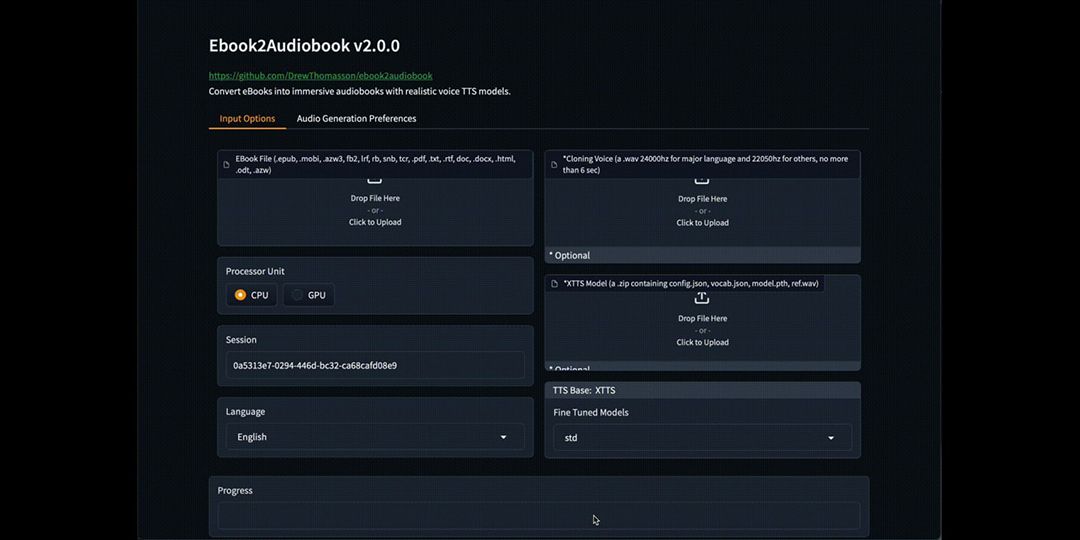
A tool called Ebook2audiobook can convert virtually any e-book into an audiobook, offering an alternative to paid audiobook services or manual narration for anyone who wants to listen to a text instead of reading it.
Under the hood, the tool runs on the XTTSv2 engine, which works with a dozen different underlying models, giving users flexibility in choosing voice quality and generation speed depending on their hardware.
It supports 1,158 languages and dialects, making it usable for texts in virtually any language, not just the major ones typically covered by text-to-speech tools. Supporting over a thousand languages and dialects is an unusually wide net for a text-to-speech tool, and it points to a different design goal than most commercial TTS products, which tend to concentrate resources on a handful of high-demand languages and treat everything else as an afterthought.
Running on XTTSv2 with a choice of a dozen underlying models also means the tool can scale down to modest hardware or scale up for better voice quality, rather than locking users into one fixed trade-off between speed and output quality. Take here.
A free option for languages paid tools skip
For anyone converting personal libraries, research material, or niche-language content into audio, a free open tool covering this many languages closes a real gap that paid narration services rarely bother to fill, since professional audiobook production in a minor language or dialect is usually not commercially viable.
The trade-off worth flagging is that self-hosted, open text-to-speech tools generally require more setup and hardware awareness than a polished paid API, and voice quality across a dozen model options will vary noticeably depending on which one a user picks.
Still, for content creators or affiliates working with multilingual audiences who need audio versions of long-form text without per-character billing, this is worth testing directly against whatever paid TTS pipeline is currently in use.
“
Supporting over a thousand languages and dialects is an unusually wide net for a text-to-speech tool — most commercial TTS products concentrate resources on a handful of high-demand languages and treat everything else as an afterthought.

Related tags




Share
SUBSCRIBE TO OUR PRIVATE CASES AND USEFUL TIPS
Subscribe to our newsletter, get only exclusive content and weekly digests, no any spam!
By providing my email, I accept the Privacy Policy.


